The Yearly Flooding of the Nile
The flooding of the Nile was a yearly event and natural cycle critical to the history and culture of Egypt. The annual floods and resulting silt deposition created the incredibly rich soil that made possible the growth of abundant crops. The richness of Egyptian soil was so characteristic and essential to the identity of Ancient Egypt that it formed the origin of the Ancient Egyptian name for Egypt: kemet, meaning, “the black land,” referring to the fertile, black soil of the Nile Delta floodplains.
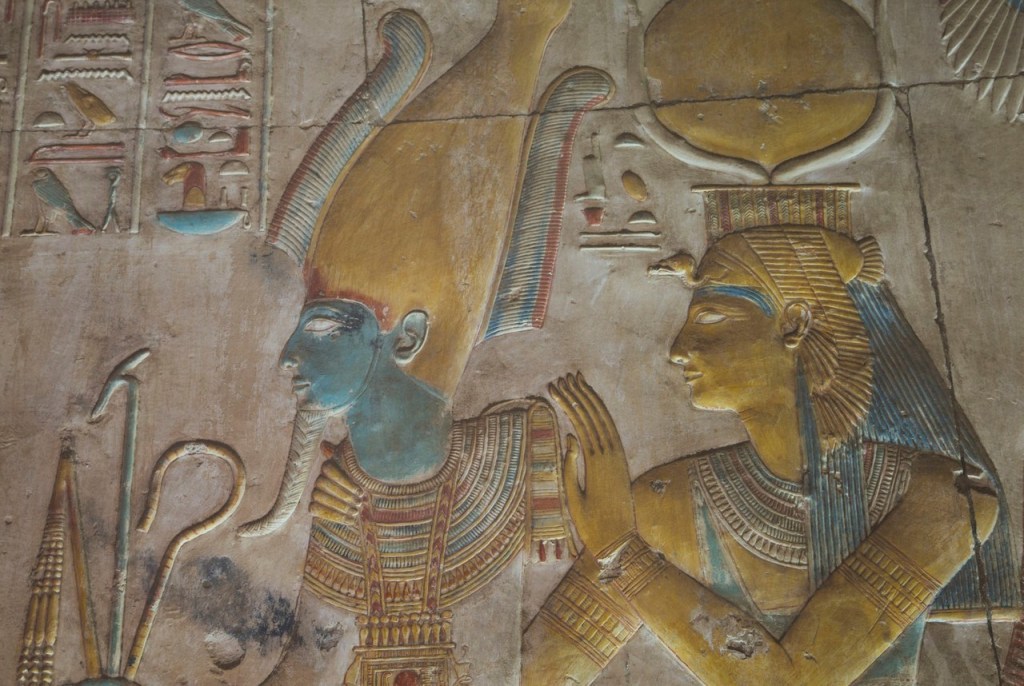
The mythological basis of the flood originated in the myth of Isis and Osiris. The floodwaters were believed to signify the tears of sorrow Isis shed for her husband, Osiris, who was murdered by his brother Set. The annual floods represented life, fertility, and prosperity, and the pattern of the Nile water levels reflected the cycle of death and rebirth. Hapi served as the god of the annual flooding of the Nile.
Surface irrigation and other cutting-edge agricultural practices originated in Ancient Egypt and allowed for the abundant growth of wheat, barley, flax (used to make linen), and Nile grass (which would become papyrus). Crucial to this agricultural activity was the Ancient Egyptian solar calendar, the first solar calendar ever created. The calendar coincided with the annual flooding of the Nile and was based upon the annual reappearance of what is now known as Sirius, the brightest star in the sky—known as Sopdet in Ancient Egypt—which served as both the name of the star and its goddess personification.
The Ancient Egyptian calendar year was divided into three seasons: Akhet (Inundation), Peret (Growth), and Shemu (Harvest).
Akhet—the season of the inundation, or season of the flood—comprised the first season of the Egyptian calendar. The season begins at the start of the month of Thout (the 11 of September) and continues through the months of Paopi and Hathor, before concluding at the end of Koiak (the 8th of January). The start of this season remains critical to the Coptic Orthodox Church with the celebration of Nayrouz, “the crown of the year,” a feast day that honors the martyrs of the Coptic Orthodox Church. The origin of the word Nayrouz is Coptic, from “niiaro-oo,” meaning “the rivers.”
Peret—the season of growth, or emergence—begins at the start of the month of Tobi (the 9th of January), continues through the months of Meshir and Paremhat, and concludes at the end of the month of Parmouti (the 8th of May).
Shemu—the season of harvest—marked the third and final season, and originated from the phrase for “low water” (transliterated as “shemu” or “shemo“). The season begins at the start of the month of Pashons (the 9th of May), continuing through the months of Paoni and Epip, and concluding at the end of Mesori (the 5th of September). This harvest season formed the origins of what would later evolve into Sham El-Nessim (“smelling the breeze”), a holiday that marks renewal and the beginning of spring. Sham El-Nessim always falls on Easter Monday in accordance with the Coptic Orthodox Church calendar.
 Giorgina S. Paiella, Ph.D.
You must be logged in to post a comment.