“If the world is against the truth, then I am against the world.”
― Saint Athanasius of Alexandria
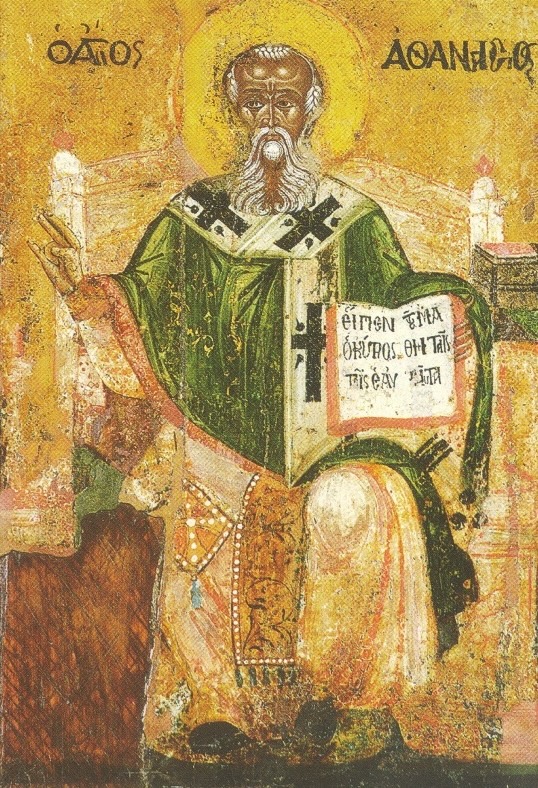
Athanasius the Apostolic, 20th Patriarch of Alexandria and Christian Egyptian theologian, devoted his life to defending orthodoxy against the heresies of Arianism. His 45-year episcopacy, from 328 to 373, was marked by great achievement and dedication to the defense of Christian doctrine, all while enduring five exiles upon the orders of four different Roman emperors (Constantine, Constantius II, Julian the Apostate, and Valens) who called for Athanasius’ banishment for his resolute defense of Christ’s divinity and his condemnation of heresy and political abuse of power. Later venerated as a saint and considered a pillar of the church for his steadfast defense of orthodoxy and the divinity and consubstantiality of the Father, Athanasius became known as “Athanasius contra mundum”: “Athanasius Against the World.” “If the world is against the truth,” Athanasius is said to have declared, “then I am against the world.”
Athanasius’ lessons are as pressing as ever. His writing is lucid, sharp, and theologically and philosophically rigorous—it has a clarity and an immediacy that resounds through the ages. He had an exceptional awareness of how theological, political, and personal forces all converge and depend upon the defense of morality, the cultivation of goodness, and the refutation of evil. That is not to say, of course, that his virtues did not come with heavy burdens and at great personal cost.
Athanasius suffered deeply throughout his life. He endured the hardships of constant persecution, multiple periods of exile, physical violence and torture, false accusations, the slandering of his reputation, threats against his life, and attacks on his people. And yet, he always remained steadfast in his faith and unwavering in his conviction. Even in physical exile, he wrote prolifically and continued to lead the faithful. He is a profound example of what it means to live by, and defend, Christian doctrine at great individual risk, rather than what is politically expedient or personally convenient.
What does it mean to live by Athanasius’ example? It means defending the faith, articulating church doctrine clearly without opacity or ambiguity, and most of all, it means standing up for what is right. It means bearing witness, avoiding moral ambivalence, advocating for the most vulnerable, and condemning in no unclear terms the persecution of Christians globally. And it means granting special attention to Athanasius’ living descendants, the Copts, who—among other indigenous Middle Eastern Christians—continue to experience severe and systemic persecution, violence, destruction, discrimination, dispossession, exile, and other human rights violations. Athanasius teaches us that truth, above all else, is the highest virtue and most noble cause.
Athanasius is the author of dozens of apologetic treatises, collections of letters, and other works, including a biography on the life of Saint Anthony the Great of Egypt, titled Life of Antony, On The Incarnation of the Word, History of the Arians, Four Discourses Against the Arians, Letters to Serapion, Contra Gentes, Apologia de Fuga, Apologia Contra Arianos, and De Synodis. Navigate below for reflections and curated excerpts.
Saint Athanasius, pray for us!
 Giorgina S. Paiella, Ph.D.
You must be logged in to post a comment.